

Table of Contents
A pizzeria delivery POS needs to do much more than process payments. Pizza restaurants manage phone orders, online orders, delivery addresses, complicated menu modifications, kitchen communication, drivers, and payments, often all at the same time.
That makes running a pizzeria different from running many other restaurants.
When the POS system does not fit the way your pizzeria operates, employees may have to enter information twice, switch between multiple systems, manually coordinate deliveries, or spend extra time tracking down order details.
The right POS system for a pizzeria can reduce that friction. It connects more of the ordering and delivery process so your team can move an order efficiently from the customer to the kitchen and ultimately to their door.
Here are eight ways the right pizzeria delivery POS can improve restaurant operations.
1. A Pizzeria Delivery POS Makes Phone Orders Easier
Phone orders remain an important part of business for many pizzerias.
During a busy dinner rush, employees need to take those orders quickly without sacrificing accuracy. The longer someone spends entering an order, searching for customer information, or confirming a delivery address, the longer other customers may be waiting.
A pizzeria delivery POS should make it easy to capture the information your team needs, including:
- Customer name
- Phone number
- Delivery address
- Menu selections
- Special instructions
- Payment method
Access to returning customer information can also make repeat orders faster and easier.
The goal is simple. Reduce the number of steps between answering the phone and sending an accurate order to the kitchen.
2. Connect Online and In-Person Pizza Orders
Customers want choices in how they order.
Some customers call. Others order directly from your website. Some walk in, while others use third-party delivery platforms.
Those options are convenient for customers, but they can create extra work for employees when every ordering channel operates separately.
Your staff may need to monitor multiple tablets, manually enter online orders into the POS, or keep track of different systems during the busiest part of the day.
A better pizza POS setup can bring more of these ordering channels together.
When orders flow into a centralized system, employees spend less time transferring information and have fewer opportunities to make mistakes. It also gives the kitchen a clearer picture of the orders that need to be prepared.
3. Manage Delivery Addresses More Accurately
A wrong delivery address can cause more than a minor inconvenience.
It can mean a late order, a frustrated customer, wasted driver time, and food that needs to be remade.
Your pizzeria delivery POS should make customer and delivery information easy to capture, confirm, and access.
That may include apartment or suite numbers, gate codes, delivery notes, phone numbers, and other details the driver needs to complete the delivery successfully.
For repeat customers, securely stored information can also simplify future orders and reduce repetitive data entry.
Getting the delivery information right when the order is placed helps everything that follows go more smoothly.
4. Improve POS and Kitchen Communication
Pizza orders can get complicated quickly.
A customer might want different toppings on each half, extra cheese, a specific crust, no onions, or a pizza cooked well done. Add multiple customized pizzas to one order, and clear communication becomes even more important.
When information gets lost between the employee taking the order and the employee preparing it, mistakes happen.
A POS system for a pizzeria should communicate orders to the kitchen clearly and consistently so employees can quickly see exactly what needs to be prepared.
Better kitchen communication can help reduce:
- Incorrect orders
- Remakes
- Food waste
- Preparation delays
- Customer complaints
For a delivery customer, accuracy is especially important. Discovering a mistake after the driver has already left is much harder to correct than catching it before the order leaves the restaurant.
5. Simplify Pizza Delivery Driver Handoffs
The delivery process does not end when the pizza comes out of the oven.
Orders still need to be organized, completed, and handed off to the correct driver with accurate customer and payment information.
Without an efficient system, employees may spend valuable time answering questions such as:
Which order is ready?
Which driver is taking it?
Where is the delivery going?
Has the customer already paid?
Are there special delivery instructions?
Is the entire order ready to leave?
A pizzeria delivery POS built around these workflows can make the handoff easier. Drivers get the information they need, employees spend less time tracking down details, and completed orders can get out the door faster.
6. Make Delivery Payments More Convenient
Payment should not add unnecessary steps to the delivery process.
Customers increasingly expect convenient payment options, whether they are ordering at the counter, online, or having food delivered to their door.
For pizzerias handling their own deliveries, mobile payment technology can be particularly valuable.
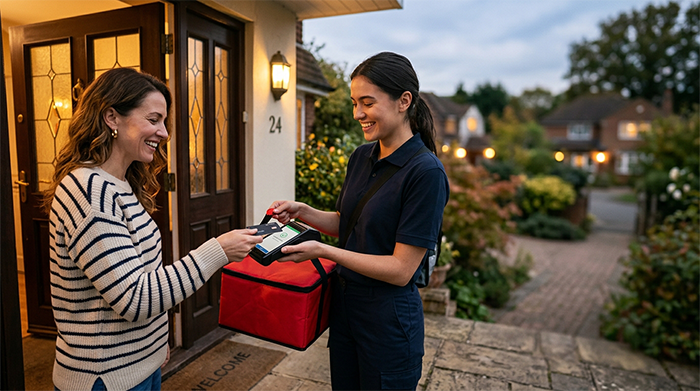
A wireless handheld POS can allow a driver to accept payment, collect a tip, and provide a receipt at the time of delivery.
This creates a more convenient experience for the customer while allowing the payment to remain connected to the restaurant’s POS system.
It can also reduce the need for employees to collect payment information over the phone before an order leaves the restaurant.
7. Get Better Visibility Into Pizzeria Operations
A modern restaurant POS should do more than take orders. It should help owners and managers understand how the business is performing.
Useful reporting can provide insight into:
- Sales volume
- Popular menu items
- Peak ordering times
- Average tickets
- Order types
- Payment activity
- Employee performance
- Location performance
For multi-location pizzeria operators, centralized reporting becomes even more valuable.
Instead of piecing together information from different stores or systems, management can get a clearer picture of performance across the business.
Better information can help operators make smarter decisions about staffing, menus, promotions, operating hours, and other areas of the restaurant.
8. Reduce Friction Across Your Delivery Workflow
One of the best ways to evaluate your current POS system is to watch what your employees have to do around it.
Are employees entering the same information more than once?
Are online orders coming through separate tablets?
Is someone manually writing down delivery information?
Are drivers waiting for employees to tell them which orders are ready?
Are customers giving credit card information over the phone when they would rather pay at delivery?
Are managers switching between multiple systems to understand what happened during the day?
These workarounds are worth paying attention to.
Individually, each extra step may only take a minute or two. Multiply those steps across dozens or hundreds of orders every week, and they can create significant friction.
The right pizzeria delivery POS should eliminate unnecessary steps, not create more of them.
What to Look for in a Pizzeria Delivery POS
Not every restaurant POS system is designed around the demands of pizza delivery.
When comparing your options, look beyond the basic list of software features. Think about the entire journey an order takes through your restaurant.
Consider how the POS handles:
- Phone orders
- Online ordering
- Customer information
- Delivery addresses
- Menu modifications
- Kitchen communication
- Delivery workflows
- Mobile payments
- Reporting
- Multiple locations
- Third-party integrations
Ease of use also matters. A powerful system will not improve efficiency if employees struggle to use it during a busy Friday night.
Support should be part of the evaluation too.
Ask how quickly your POS provider responds when there is a problem. Find out whether support is available during your restaurant’s operating hours, whether local service is available, and what happens if hardware needs to be repaired or replaced.
Your POS technology and the support behind it should work together to keep your restaurant moving.
Is Your Pizzeria Delivery POS Keeping Up?
Pizza delivery has changed significantly, but many restaurants still rely on POS systems and processes built for a simpler operating environment.
Your employees should not have to work around your technology.
The right pizzeria delivery POS can reduce unnecessary steps, improve order accuracy, simplify delivery payments, strengthen kitchen communication, and help employees move orders from the phone or screen to the customer’s door more efficiently.
When evaluating a POS system for your pizzeria, look beyond individual features. Consider the entire workflow.
How does an order enter the system? How does it reach the kitchen? How is delivery information managed? How does the driver accept payment? What happens when your team needs support?
The answers can reveal whether your current POS is helping your operation or slowing it down.
Secure Hospitality Solutions helps pizzerias evaluate their current workflows and build a POS setup around the way their restaurant actually operates.
Is your current POS creating more steps than it eliminates? Schedule a free demo with Secure Hospitality Solutions to see how a better pizzeria delivery POS setup could work for your restaurant.